When I look back on my life to trace my artistic journey, I usually begin in the early 1980s when I was in my mid-twenties and working as a layout/design artist for a local newspaper in the Chicago suburbs. On break one day, in the lunch room, I came across a TIME Magazine that had a review of a new series of paintings by artist Willem de Kooning; an artist I had never heard of before, but whose works immediately attracted and intrigued me. These works, that were eventually to be known as de Kooning’s “later works”, were composed of simple lines of mostly primary colors that could take unexpected twists and turns. What was it, I found myself wondering, that could make such seemingly simple lines and colors so compelling to look at? This is a question that has continued to interest me throughout the years and is where I mostly locate the beginning of my journey as both an artist and an art lover. Not only was I soon subscribing to many art magazines and dragging friends and family down to the thriving Chicago art district at the time (located between Superior and Huron streets and given the nickname “The SuHu District” in a nod to the then well-known Soho art district in New York City), I also soon began making my own art, initially in pastels, then in acrylic and finally (for the past twenty years) almost solely in charcoal and graphite on paper.
Although I do not have a resume, never having gone to art school, and having only shown my work publicly twice, in local coffee shops (one of which resulted in a review in a local newspaper that I am here including a photo of), I have always taken my art very seriously, have viewed it as a continuation of that original question I asked about de Kooning’s work and have only really ever stopped making art during my seven years as a graduate student; although even then I was a frequent visitor to the art stacks in my university’s library where I would take breaks from my studies to peruse the works of a variety of artists from the old Renaissance masters up to the Post Impressionists.
My process as an artist is to immerse myself in what I am working on and to try and save analysis and critical thought for only after the work is completed, with this second step being similar to how I view the work of any artist whose work I enjoy looking at; although, of course, it is never quite as simple and straightforward as that and I’m aware that my critique of the works I have completed do enter into the way I approach the next drawings I work on. There are two ways in which I do tend to view my work, with the first being a kind of mythology I have invented about my art in which I see myself as taking a journey in which I am exploring new life forms and landscapes; similar to our own, but different as well. But from a more objective stance, what I have come to realize is that there are certain shapes, figures, strategies and techniques, etc that I like to employ when making my art and that all these things do interact and evolve both individually and in relation to each other over time—with my body of art being a documentation of this process. The philosopher Ludwig Wittgenstein once described language as a life form. By which I think he meant that languages change and evolve over time, like living things. I tend to think of my art and the art of many of the contemporary artists’ whose works I enjoy in a similar way.
I would love to say more about my art, but will save that, hopefully, for the zoom meeting. Let me finish just by just saying, I have read all the member expectations and would look forward to being an active member of such a community.
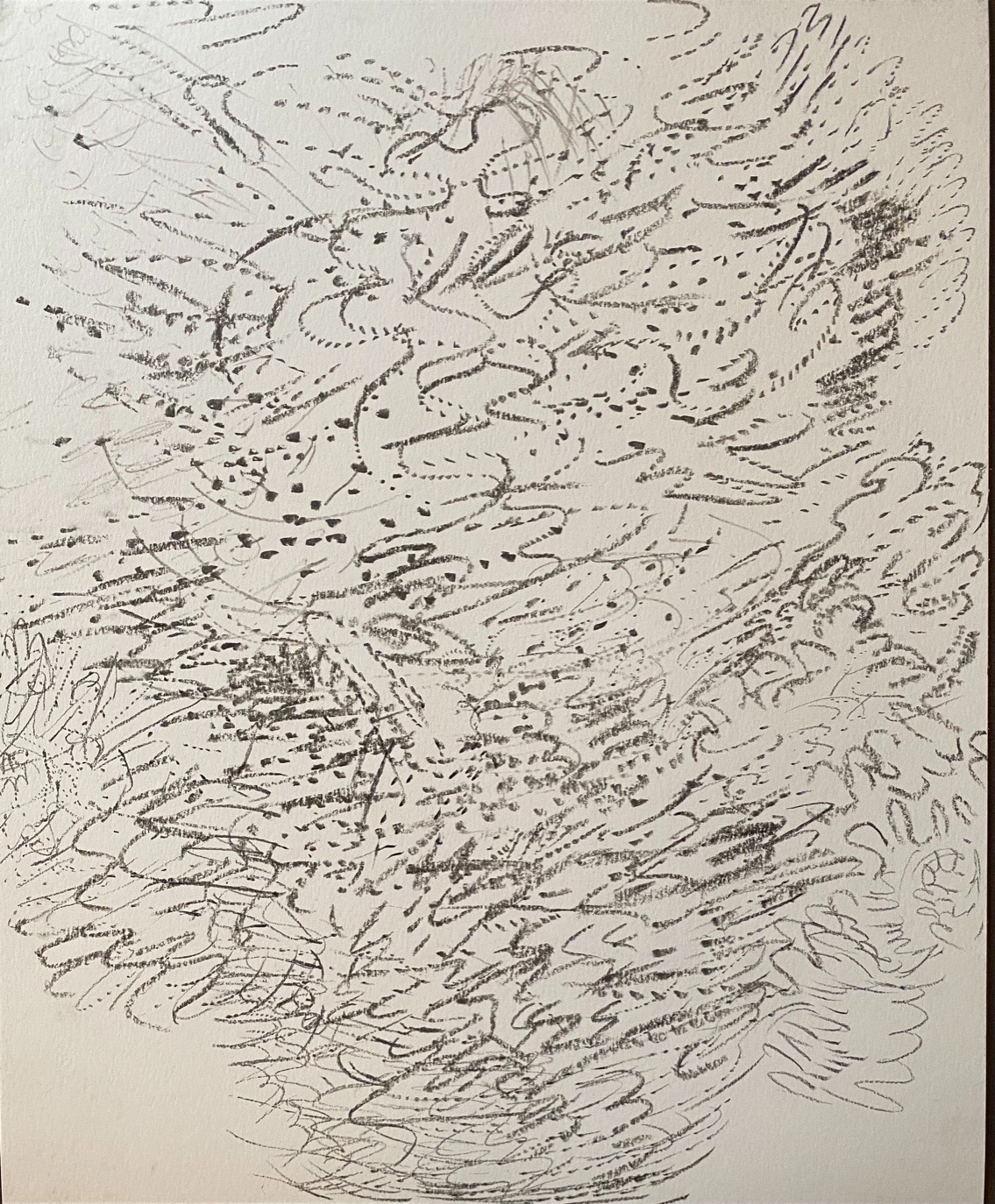
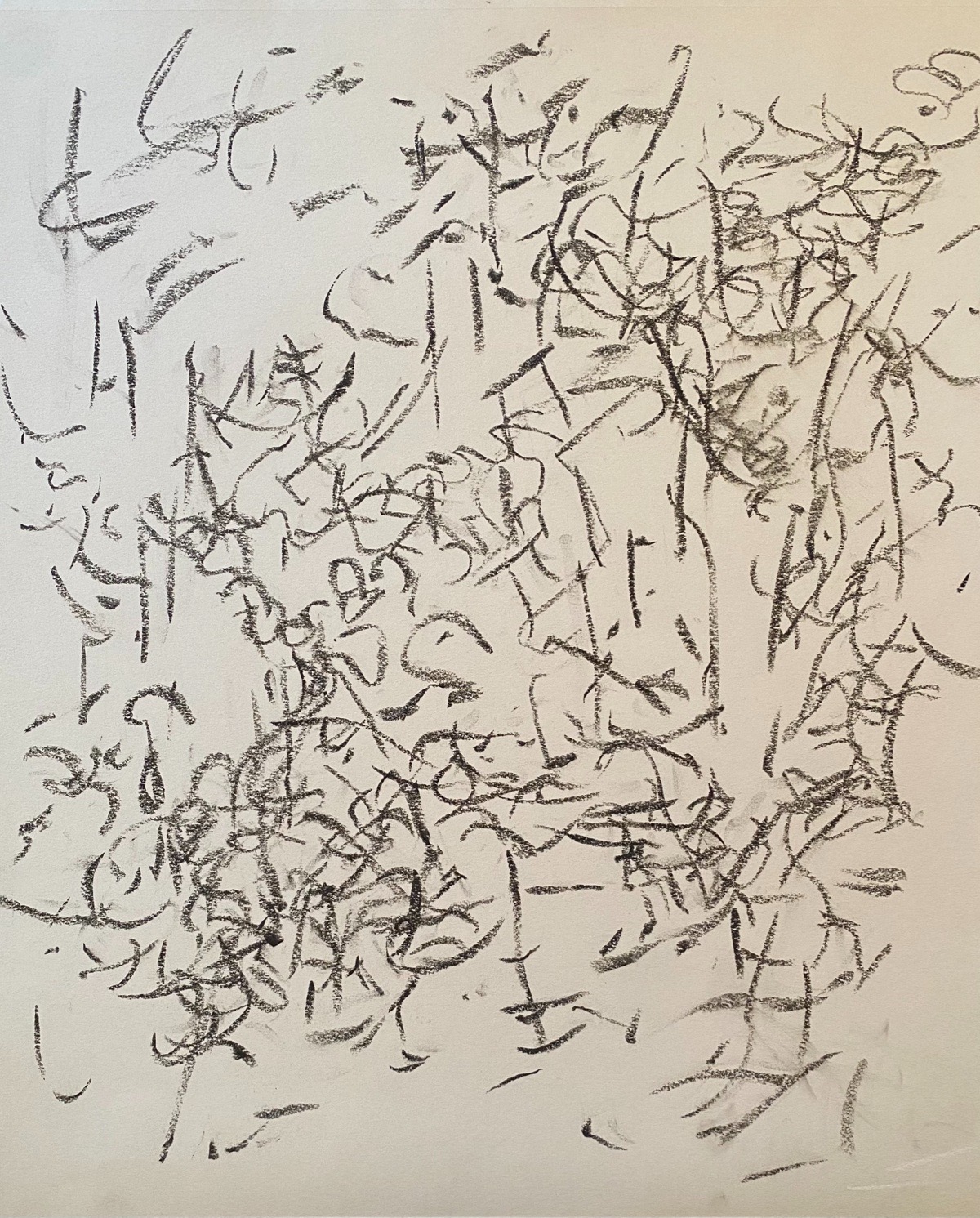
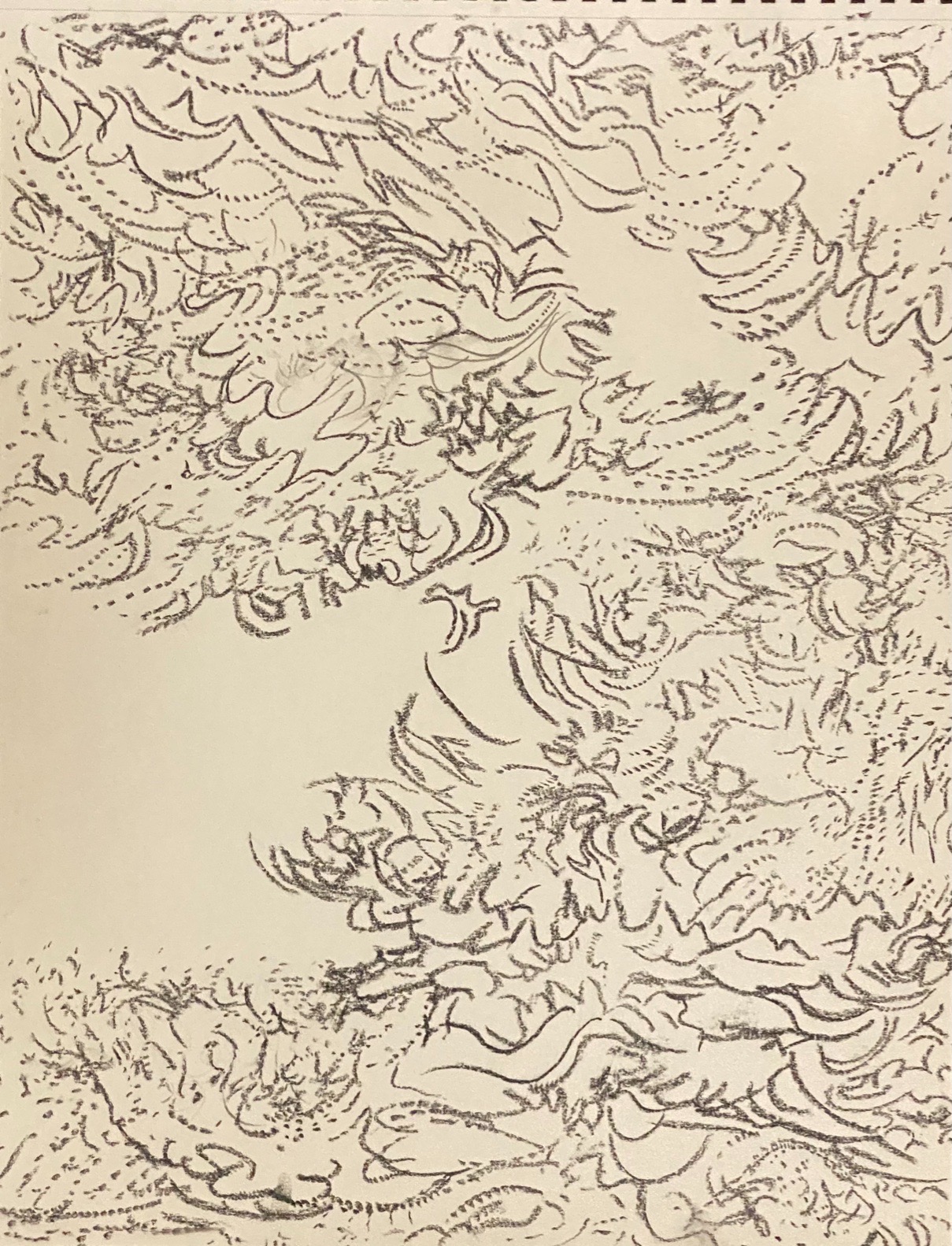
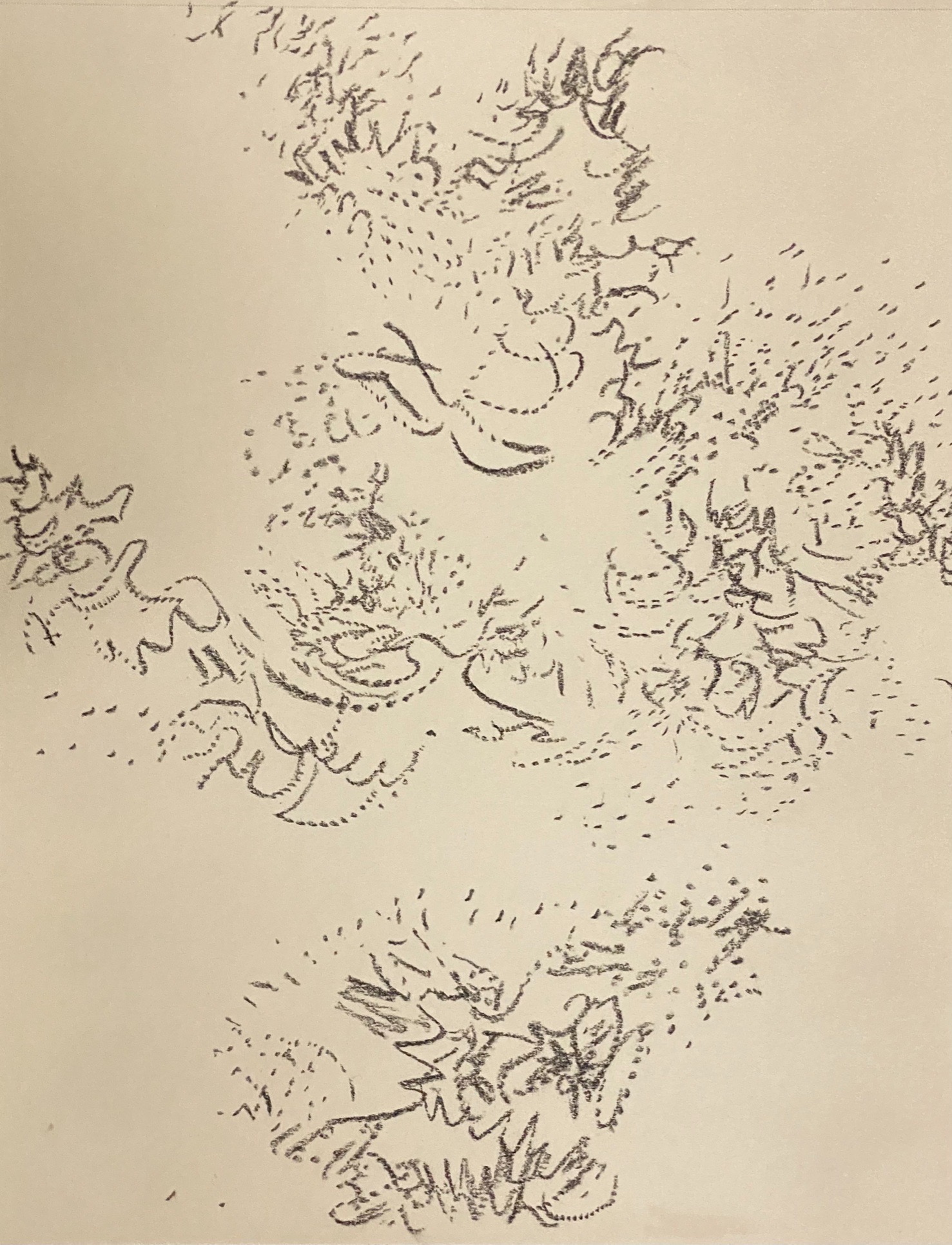
I have chosen 12 pieces as representations of my current art from 2023 to present that I will be sending by follow up emails.
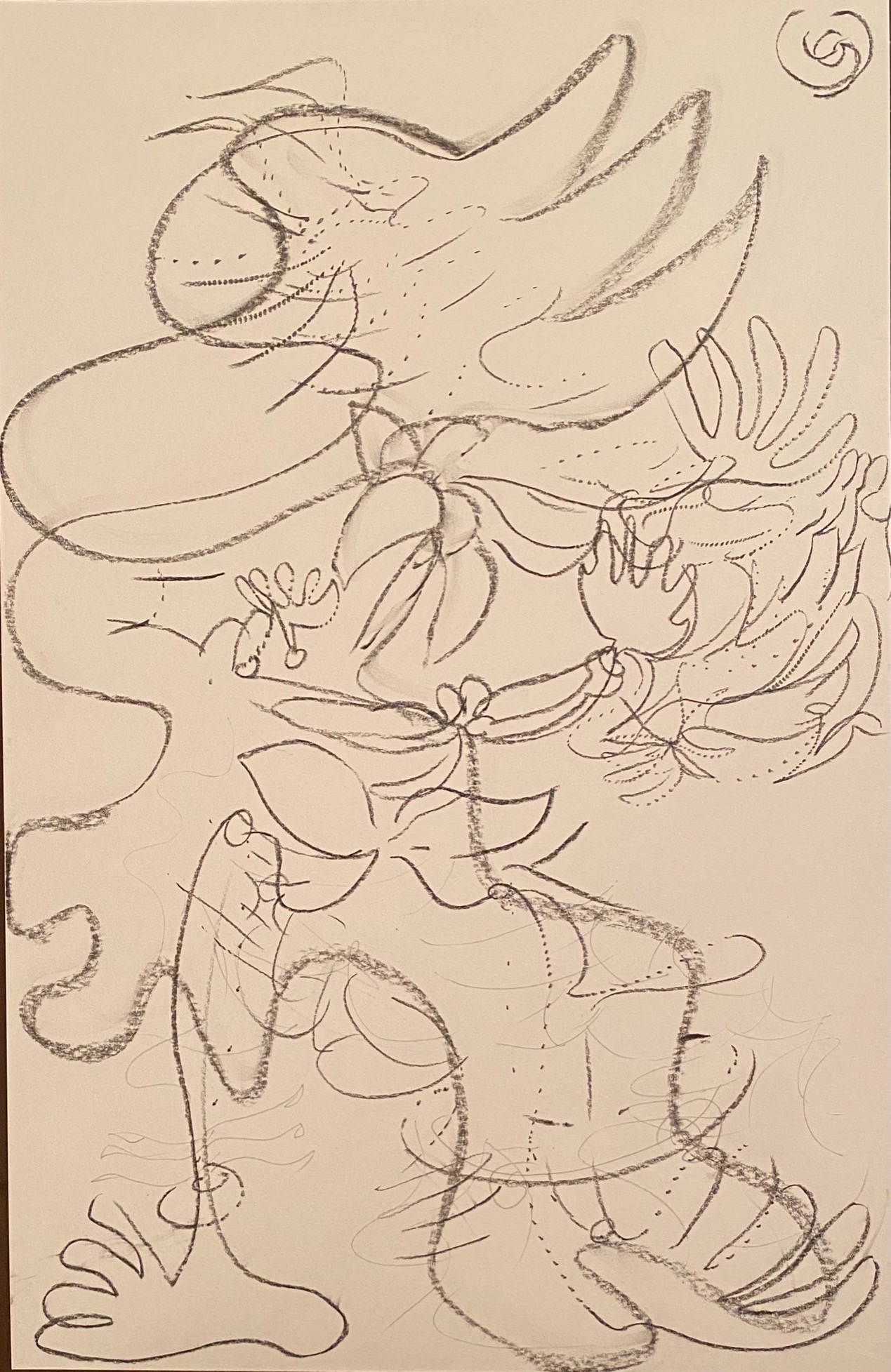
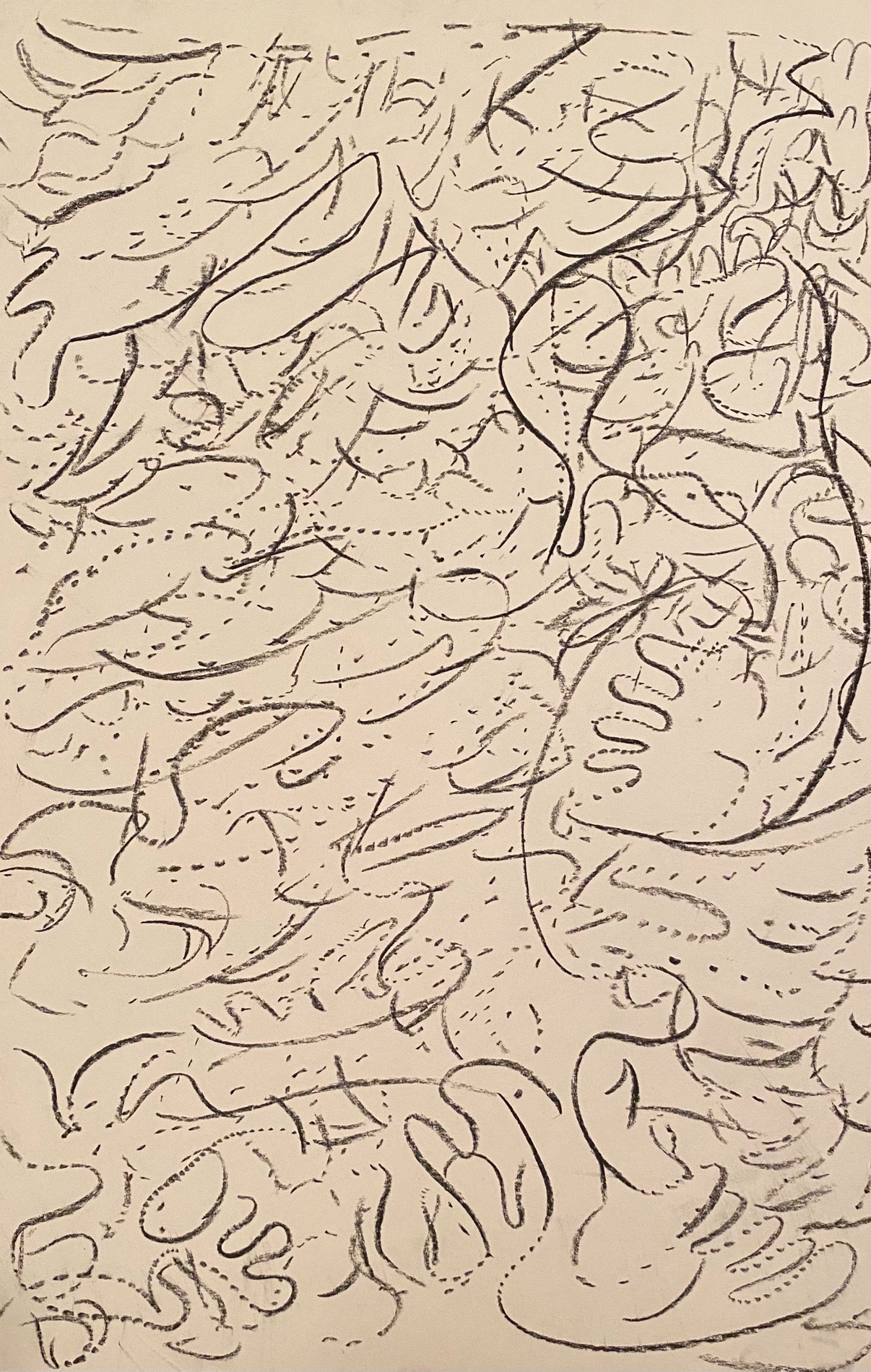
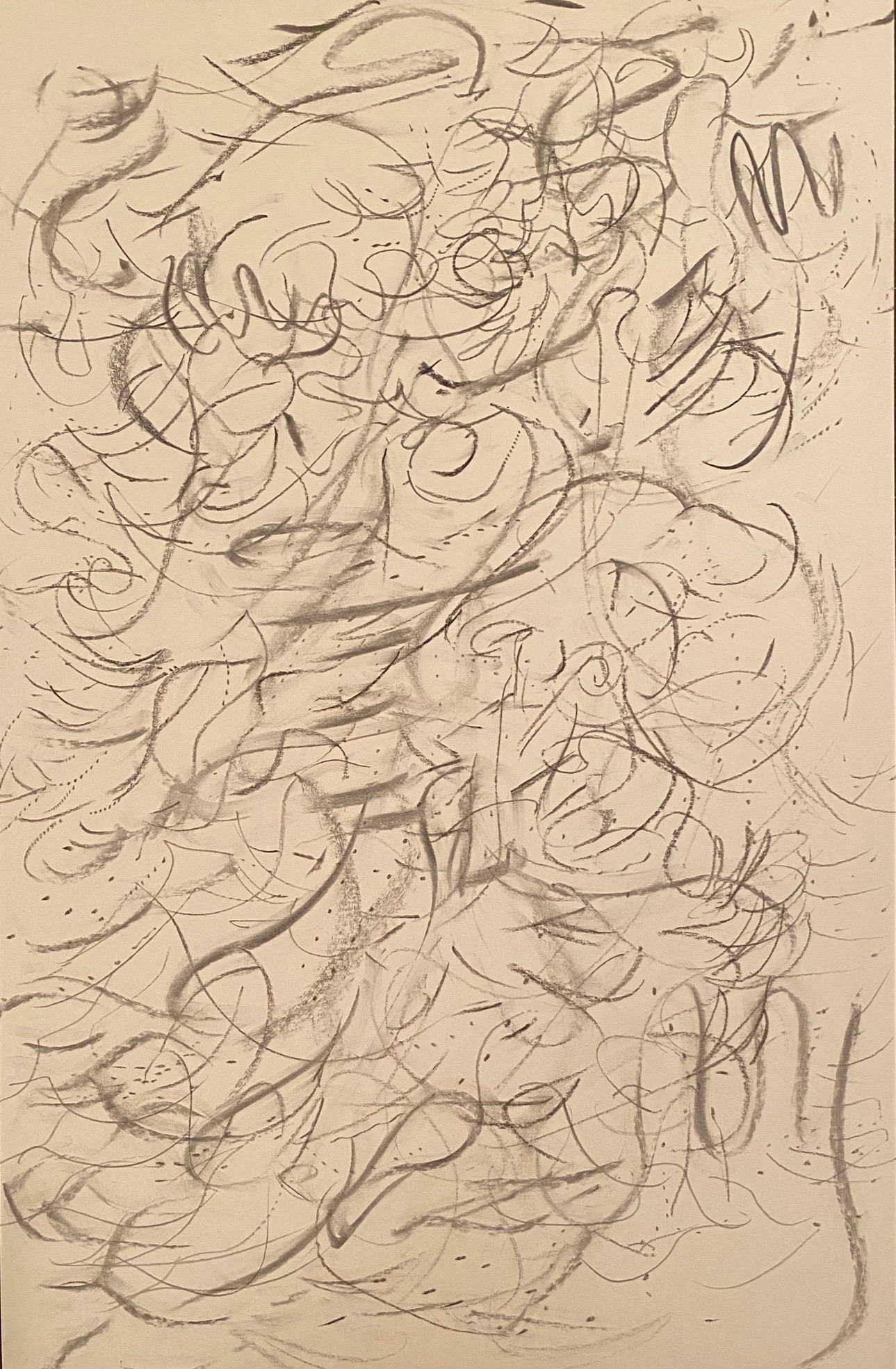
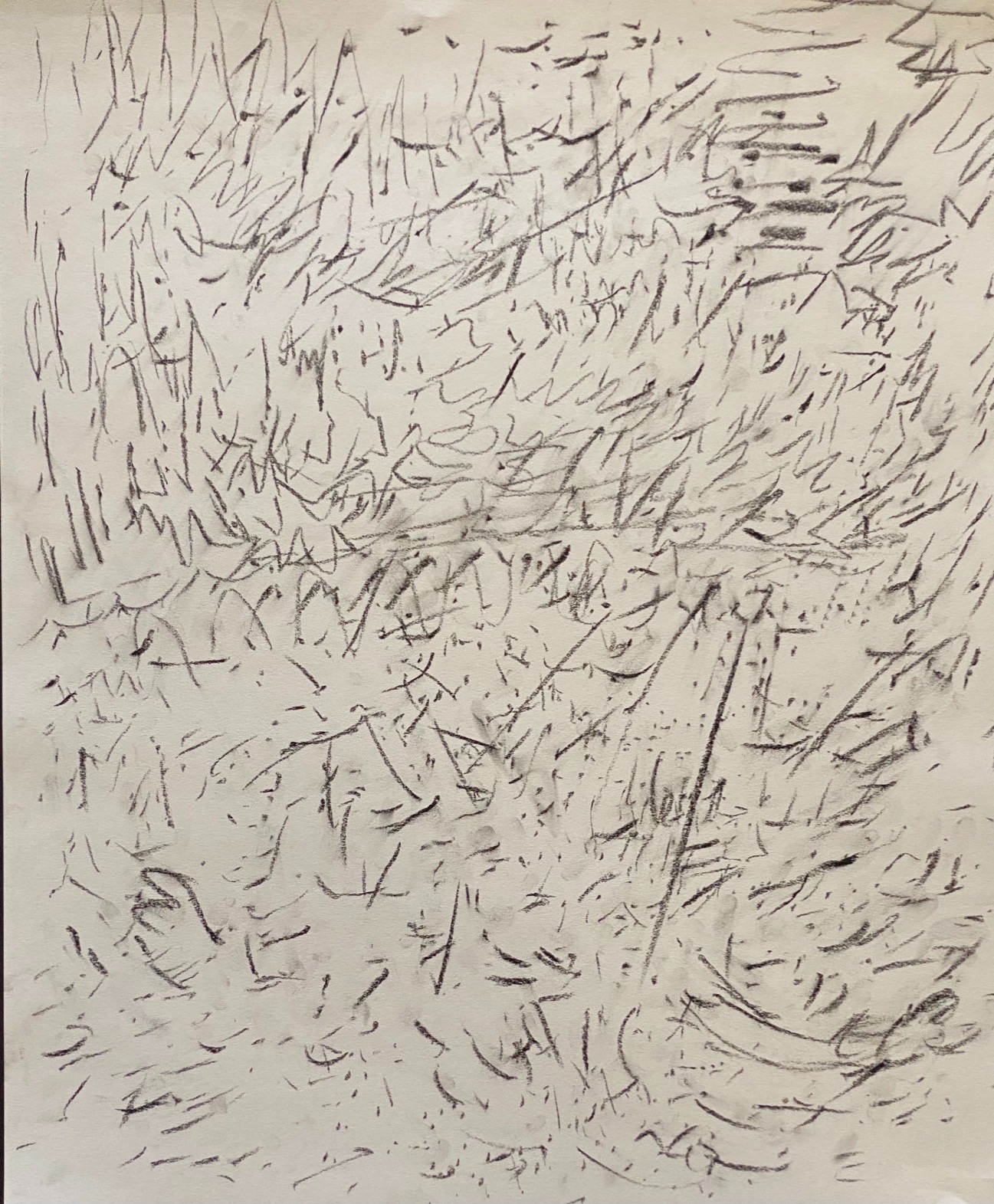
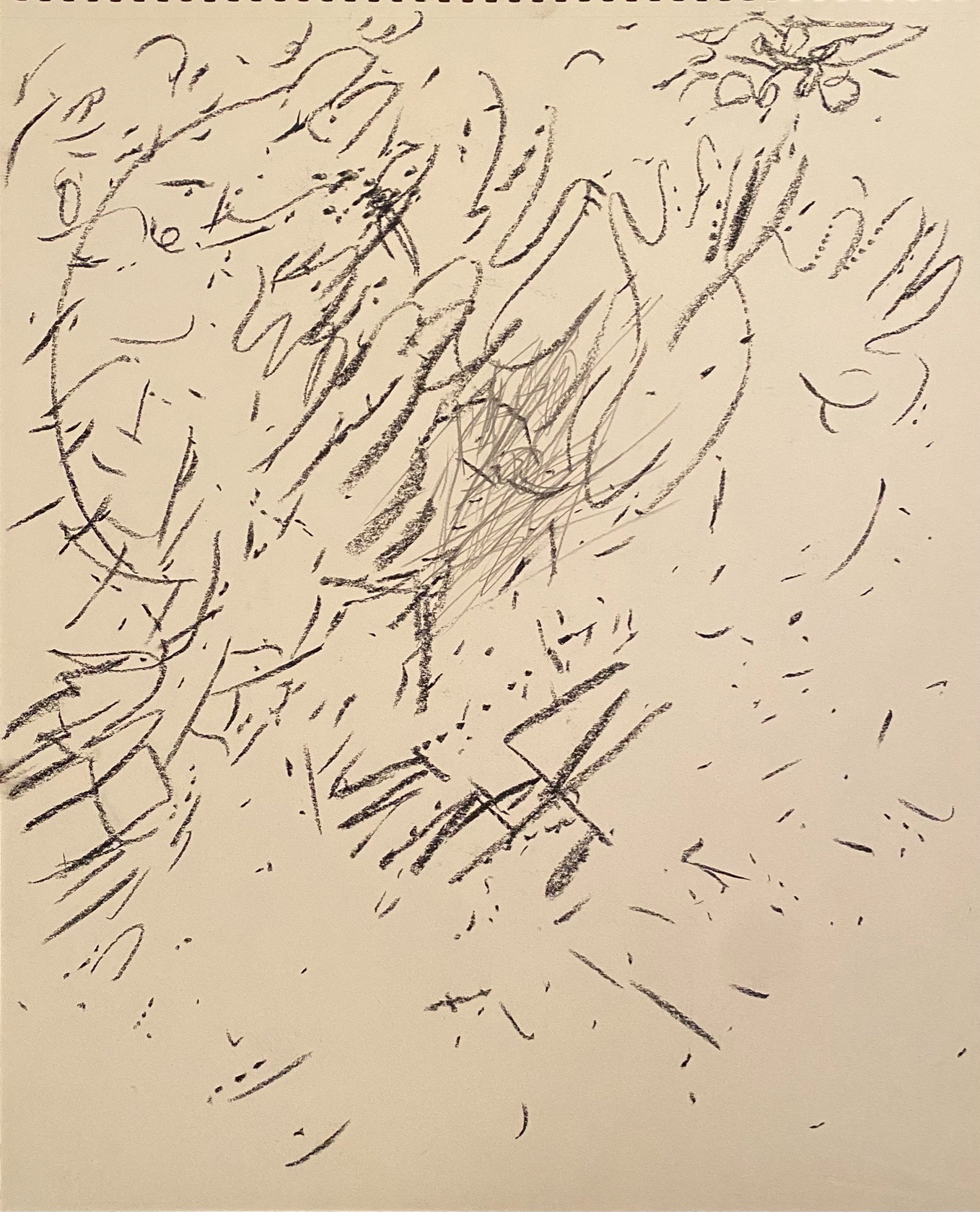
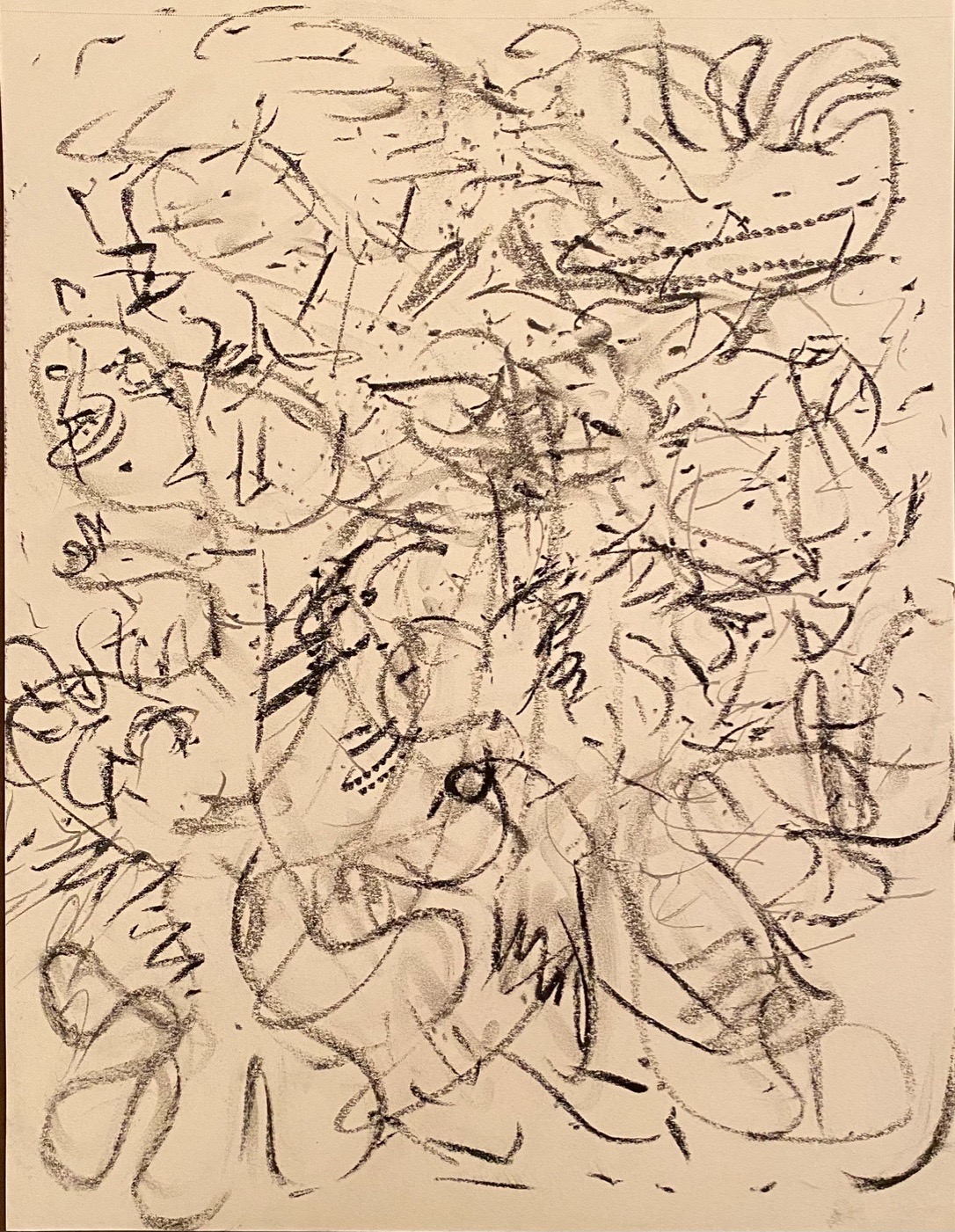
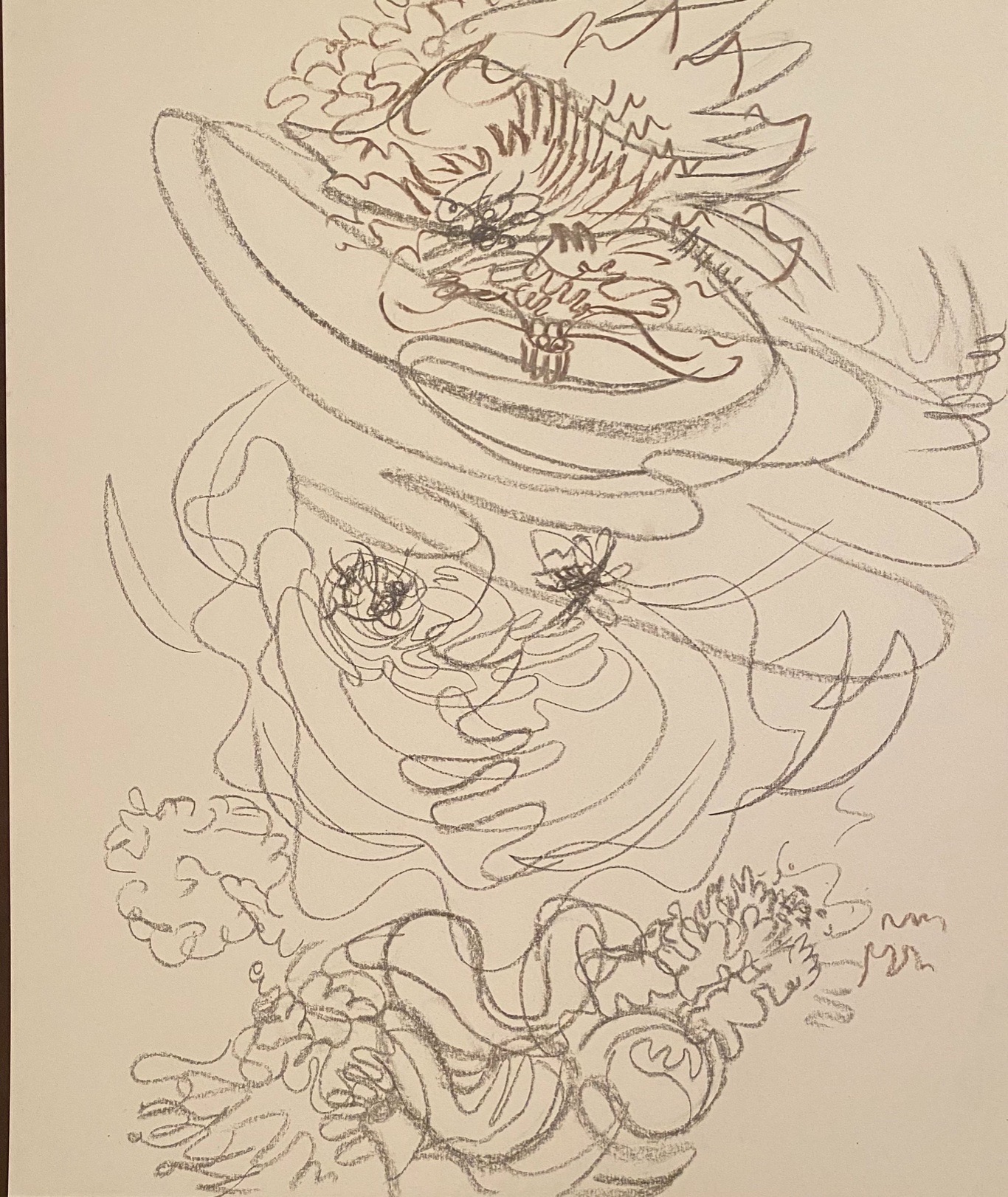
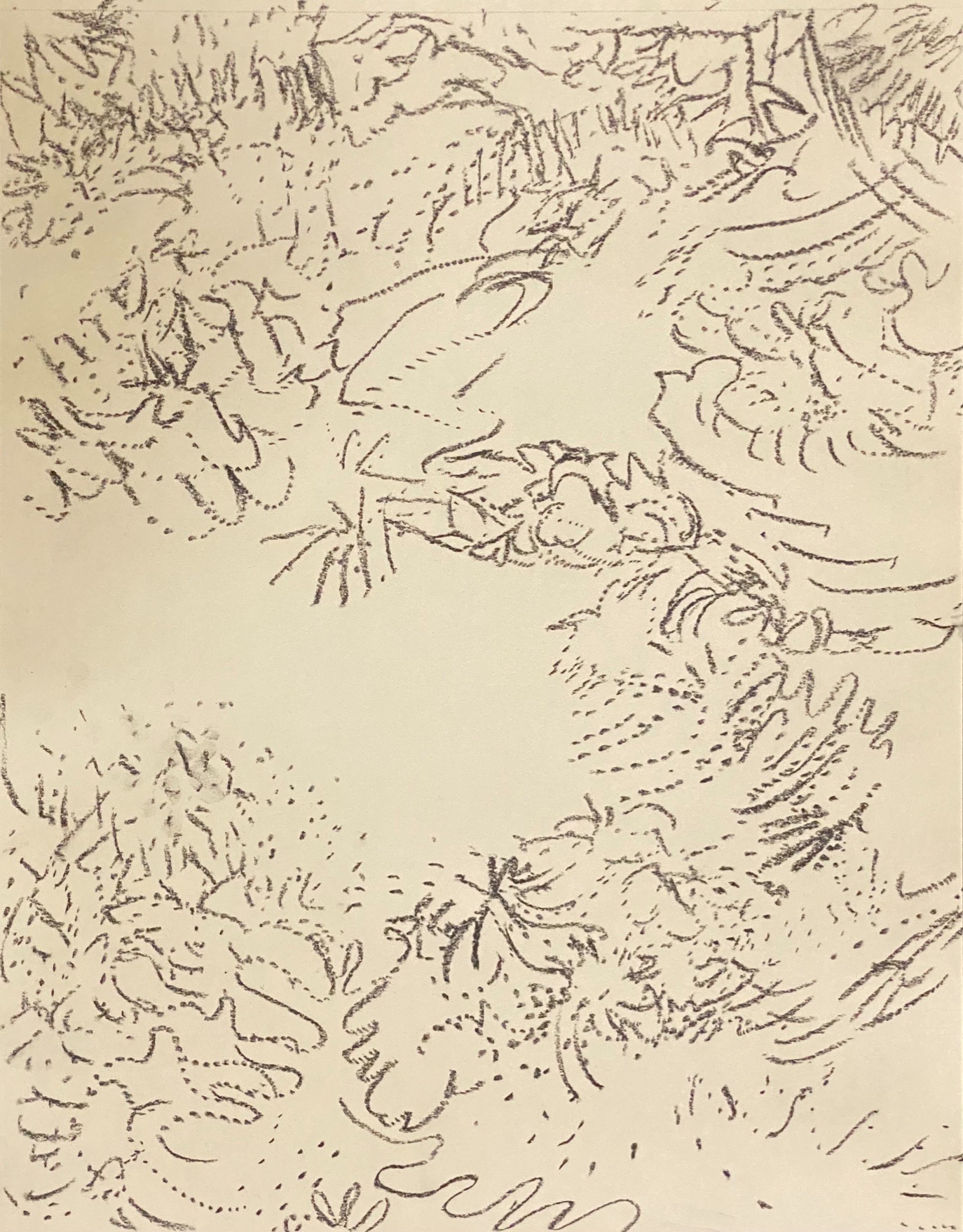
My current work, of which I will be including 12 examples here, began very much in earnest during the pandemic and continues up to the present time. The medium of all the works are charcoal and/or graphite on paper. They are, for the most part, untitled, but are identifiable by a code I have developed (e.g., A23abc), with the number “23” indicating the year the piece was completed. The sizes of my works range from 24×18 inches to 12×9 inches.
A Review
Ray Foody wants to excite your nerve endings.
Through his artwork, hanging in Burritt’s Cafe in Weedsport, Foody hopes to stimulate every set of eyes his art meets. He designed its raw sensory data to be deciphered any way the spectator wishes.
So it should surprise no one that Foody’s art is fully abstract.
“I start with an empty canvas and just see what I’m compelled to do,” he said. “There are no real rules; it’s all very open. I try to let it be a dialogue.”
Foody limits his tools to graphite, pastel and charcoal, and his palette to black, white and gray. Though narrow, the method serves his mission.
On 2-by-3-foot sheets of paper he can densely pack details using his drawing utensils. One piece looks like a city overdosing on industry with dark plumes of smoke, impossibly arched roads and automobile traffic in the air. Another looks like a swarm of flying saucers circling over a landscape, leaving curvaceous trails of smoke in their wake.
But Foody’s images are like Rorschach tests—these interpretations say more about this writer than his work.
The way people perceive and interpret the sprawl of visual stimuli interests Foody, a clinical psychologist and avid reader of philosophy. He feels abstract art reaches the audience’s nerve endings with amorphous imagery open to interpretation, while representational art imparts on the audience the artist’s interpretation—of a landscape, a dog or whatever the work depicts.
Thus Foody’s exhibit asks his audience to “Play Without Words.” At Burritt’s, he has found a willing pool of participants in the process.
“Several people come in and wander around to look at each individual piece,” said Darryl Wolford, who co-owns Burritt’s with his wife, Sherry. “There’s a lot of color and texture in our cafe, so the black and white artwork made an interesting and dramatic contrast.”
Foody’s interest in the audience end of the artistic exchange is surpassed by his passion for its authorial side. With a reduced tool set, Foody can also watch the way his creativity responds over time.
“I’ve always been interested in evolution. Often I notice I go through certain developments as I’m trying something out,” he said. “I’m discovering what I can do with the materials I have.”
Spanning two years and 70 drawings, Foody’s current series has yet to trace the full path his art travels. He painted multimedia works with acrylics and pastels prior to hatching the idea. Foody doodled and took art classes in high school in the Chicago suburbs, but art was an afterthought to him until his early 30s, when he spotted the abstract paintings of Willem de Kooning.
Inspired by the German artist’s clashes of brusque colors and forms, Foody dedicated himself to art.
That dedication intensifies when Foody is at work in his studio.
“There is a loss of a sense of who he is and of time,” said Kathleen Buschman, a friend of Foody’s since the two worked together at the Hillside Children’s Center in Auburn. “He can go hours and hours and not think to stop and eat, or even know what’s going on around him. That’s what I find most fascinating about his work.”
Though she acknowledges the ferocity of Foody’s devotion, Buschman believes his art is no obsession. His refusal to call it a career suggests she’s correct. Instead, wholly wrapping himself up in a work’s creation is a conscious part of Foody’s process. “Ray’s greatest strength is his ability to be one with the medium and be right in the very moment,” Buschman said. “What he’s got when he makes art is the key to living; it’s just showing up for the moment.”
Foody finds continued inspiration in the children he sees at his practice in Corning. His method mirrors the purity of their creativity, which he feels is free from doubt and self-criticism. Like Picasso, Foody finds himself aspiring to make art from the mindset of a child. The splendor of his work may suggest a child’s hand, but each canvas reflects an aged respect for art’s power to create meaning with its audience.
“I’m not trying to define something whole,” he said. “Just capture a sense of living in the world.”
Contact
- 2250 N Triphammer Rd, Apt M3C, Ithaca NY 14850
- (607) 262-6834
- rayofoody@gmail.com
16 Responses
I like seeing different kinds of work in the Gallery, a variety of techniques puts energy into our space, and enhances everybody’s work. Ray’s work is different from what we have and is well presented.
I kept looking at the drawings of Ray Foody and wondering why they didn’t appeal to me. They seemed monotonous and all the same even though I found the variety of shapes and lines interesting. I think the reason is that there is not enough light-dark contrast. He does not take advantage of the range of darkness from high light to deep black that his pencil, charcoal, or ink can create. Also there is not enough variety in width of line. However I think he might be an interesting addition to the gallery once we have a chance to talk to him and possibly see more work.
I met Ray in the gallery and I liked his personality but I’m concerned that he may not have the needed computer expertise needed to be a member. He has a very outdated cell phone with questionable connections and he doesn’t own a computer. These things have nothing to do with his art but I do think a responsible member needs a good phone and computer. His work looks much better framed than on our web site. I do like the whimsy of it and the meditative elements.
Yes, I find his 2D work to be very different than what we have seen at SOAG. I like it because the line work is whimsical, lyrical, and just plain fun. His work reminds me of Georg Baselitz’s work.
There is a fun whimsy to these, but after two or three, I feel myself wanting more.
I should clarify “find myself wanting something more substantial.” Not sure substantial is the right word
While his work is, indeed, quite different from the rest of us, and despite the fact that I found a couple of his pieces rather like whimsical, quasi-representational caricatures, overall, his pieces seemed to be redundant and didn’t make me want to linger very long. That, coupled with his lack of prior exhibiting experience, make me unenthusiastic about his candidacy.
The line “He can go hours and hours and not think to stop and eat, or even know what’s going on around him. That’s what I find most fascinating about his work.” caught my attention – that is not a strong recommendation for his work. Never the less, I see him working in the traditions of Surrealist Automatism, Joan Miro’s calculated accident method, and even Picaso’s sketch book ( esp the more figurative pieces). They are reminiscent of Dora Donovan’s work. She was a member of the gallery for many years, although her work had a stronger sense of static organization. I don’t like all of this work, but I find myself swaying to the rhythm of many of them, and some I can feel very strong wind, or the random movements of minuscule creatures. His work is very different tfrom the rest of us.
I agree with Cindy and Eva. These drawings do not appeal to me.
I have now seen his work in person at the gallery and am afraid they now appeal to me even less than before. Sometimes simple “scribbles” (NO slur intended) can be energetic: interesting and appealing… but I can’t seem to find that in these drawings. I know I am taking this quote totally out of context, so it should not be applicable… but for me “there is no there there”!
The energetic lines are fun and whimsical. I’m looking forward to hearing more from him in the Zoom meeting and to taking a closer look when I stop into the gallery to see the work in person.
Somehow they do speak to me, but I will wait till the zoom meeting to make up my mind.
They also speak to me. I love the energy. But I also want to see the presentation and hear what he has to say.
I do not think this applicant’s work shows depth or any idea of different directions he might go in. It would be helpful to see other media and subject matter because these all fall flat to me, and they are not compelling in my opinion.
I agree with Eva. This is not the qualty of art present with current members.
The bottom line, I don’t find these drawings to be engaging or exciting.